
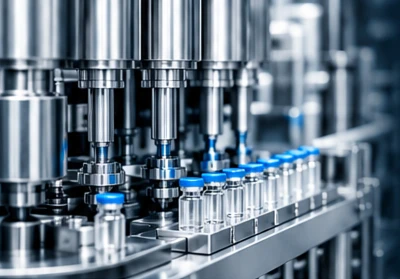
When preparing injectable-grade reagents, reconstituting lyophilized compounds, or diluting analytical controls, selecting the correct liquid base is critical for trial accuracy, molecular stability, and baseline experimental consistency. One of the primary diluents used across pharmaceutical research, biochemistry laboratories, and institutional settings is bacteriostatic water.
Understanding what bacteriostatic water is, how it differs from other sterile water preparations, and how to store and handle it properly ensures reproducible chemical testing and long-term assay reliability.
What Is Bacteriostatic Water?
Bacteriostatic water (frequently designated as BAC water) is highly purified, sterile water for injection containing 0.9% benzyl alcohol added as an antimicrobial preservative.
Unlike single-use sterile water, the addition of benzyl alcohol inhibits the enzymatic activity and reproductive capabilities of potential bacterial contaminants. This preservative allows the container to be accessed multiple times over an extended research protocol (up to 28 days post-initial stopper puncture) without compromising the sterile state of the remaining fluid.
Key Technical Specifications
- Formulation: High-Purity Water for Injection + 0.9% Benzyl Alcohol Preservative
- Packaging: USP Type I Borosilicate Glass Multi-Dose Vials (3 mL, 10 mL, 30 mL)
- Closure System: Chlorobutyl / Butyl Rubber Stopper with Aluminum Flip-Off Seal
- pH Range: 4.5 – 7.0
- Primary Function: Solute vehicle and diluent for reconstituting lyophilized research peptides, proteins, and chemical reagents
The Chemical Mechanism of Benzyl Alcohol
The functional mechanism of bacteriostatic water relies entirely on the chemical actions of benzyl alcohol at a exact $0.9\%$ mass-to-volume concentration.
Membrane Permeability and Disruption
At a concentration of $0.9\%$, benzyl alcohol functions as a bacteriostatic agent rather than a immediate bactericidal agent. It inserts into the lipid bilayer of bacterial cell membranes, altering membrane fluidity and increasing cell wall permeability. This disruption halts the active transport of nutrients, dissipates proton gradients, and prevents bacterial cell division without causing violent cellular lysis that could contaminate sensitive molecular assays.
Multi-Dose Integrity Maintenance
Every time an analytical needle or syringe pierces the elastomer stopper of a multi-dose vial, micro-volumes of ambient atmosphere or surface particulates enter the container. The embedded benzyl alcohol neutralizes trace bacterial introductions, preventing colony formation, bio-film generation, and enzymatic breakdown of solutes inside the vial over multi-week testing periods.
Bacteriostatic Water vs. Standard Laboratory Solvents
Selecting an incorrect solvent when reconstituting unstable compounds causes rapid target degradation, altered liquid dynamics, or unmeasured bio-burden.
| Parameter | Bacteriostatic Water | Sterile Water for Injection | Sterile Normal Saline (0.9% NaCl) | High-Purity HPLC Grade Water |
| Preservative | 0.9% Benzyl Alcohol | None | None (or optional) | None |
| Container Type | Multi-Dose Borosilicate Vial | Single-Use Ampoule / Vial | Single-Use or Multi-Dose | Sealed Glass / PTFE Bottle |
| Puncture Lifespan | 28 Days | Immediate single-use discard | Single-use or short-term | Variable (requires filtration) |
| Primary Indication | Multi-draw peptide reconstitution | Single-assay reconstitution | Isotonic solution preparation | Mobile phase / Chromatography |
| Ionic Strength | Non-ionic (Preservative only) | Non-ionic | High ($0.9\%\text{ NaCl}$) | Ultra-low conductivity |
Core Applications in Laboratory & Institutional Research
Bacteriostatic water serves as a standard non-reactive matrix across multiple scientific disciplines:
1. Lyophilized Peptide & Protein Reconstitution
Many synthetic peptides, enzymes, and recombinant proteins are supplied in freeze-dried (lyophilized) powder matrices to prevent hydrolytic degradation during transport. Injecting bacteriostatic water into the vial redissolves the matrix into a uniform solution suitable for serial dilutions, assay calibration, and micro-pipetting.
2. Multi-Draw Serial Dilutions
When a research protocol requires precise, sequential sampling from a single stock solution over days or weeks, bacteriostatic water prevents background microbial growth from altering measured concentrations or introducing target-degrading proteases.
3. In Vitro Analytical Testing
Used as a reliable liquid phase in spectrophotometry, microfluidic chips, and specialized cell culture setup steps where consistent antimicrobial control is necessary without introducing high salt concentrations like saline.
Storage, Handling, and Stability Protocols
To preserve chemical specifications and ensure test validity, laboratory technicians must adhere to standardized handling conditions:
Unopened Storage Parameters
Store sealed vials at controlled laboratory temperatures between 20°C and 25°C (68°F to 77°F). Keep vials away from direct light exposure, radiant heat sources, and sub-zero environments that could stress the glass-to-stopper seal interface.
Post-Puncture Protocol & 28-Day Benchmark
Upon initial needle penetration through the rubber septum:
- Log the puncture date and time directly onto the vial label.
- Discard the vial and remaining liquid volume 28 days after initial entry, in accordance with standard USP guidelines for multi-dose containers.
- Never blend remaining fluid from an expired multi-dose vial into a fresh container.
Visual Quality Inspection
Prior to drawing fluid, hold the vial up to a neutral light source:
- The solution must remain completely clear, colorless, and free of visible particles or cloudiness.
- If phase separation, precipitation, or discoloration occurs, dispose of the container immediately.
Essential Laboratory Safety Precautions
- Strict Research Exclusivity: Bacteriostatic water formulated for laboratory reconstitutions is restricted strictly to non-clinical in vitro testing, analytical research, laboratory development, and institutional experiments.
- Toxicity Warnings: Benzyl alcohol exhibits cellular toxicity in non-target systems and must not be used in live cellular models sensitive to organic solvents or alcohol derivatives.
- Tonicity Requirements: Bacteriostatic water is non-isotonic. Adjustments with appropriate buffer salts (e.g., PBS) may be required depending on downstream assay specifications.
Frequently Asked Questions (FAQ)
Why is 0.9% Benzyl Alcohol chosen over other preservatives?
Benzyl alcohol at $0.9\%$ offers an optimal balance between potent antimicrobial inhibition and low chemical reactivity with most synthetic peptides, organic small molecules, and proteins.
Can Bacteriostatic Water be frozen to extend stability?
Freezing is strongly disadvised. Freezing water expands, which compromises the elastomer stopper seal, creates micro-fractures in USP Type I glass vials, and causes phase-separation of the benzyl alcohol preservative upon thawing.
What is the difference between USP Type I Glass and standard glass vials?
USP Type I borosilicate glass has maximum chemical inertness and minimal hydrolytic leaching, ensuring that the pH and purity of the bacteriostatic water remain unaffected throughout its shelf life.